
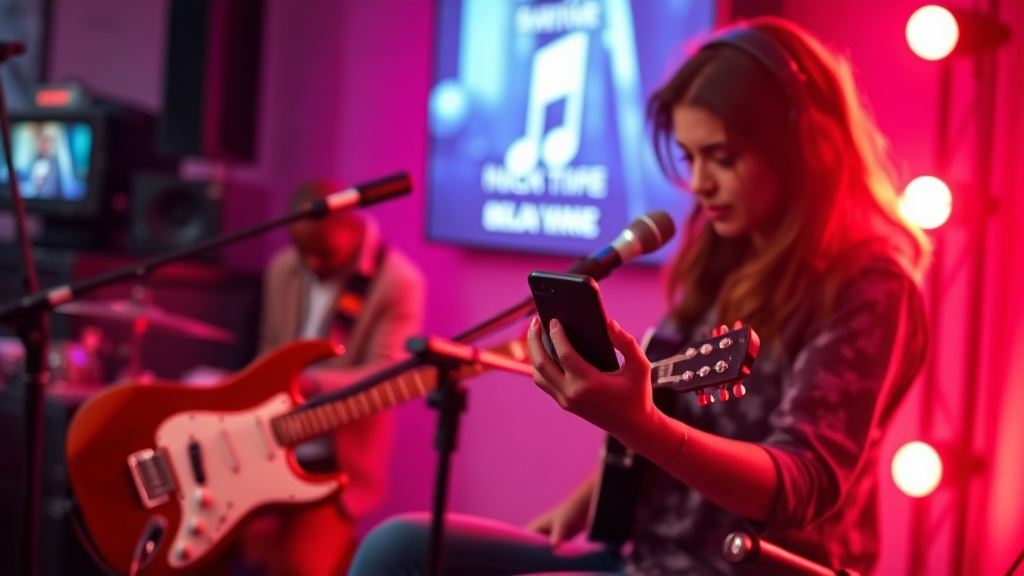
The music industry has experienced a seismic shift. Where physical albums and concert tickets once controlled artist earnings, digital services now shape the financial landscape. Spotify, Apple Music, and YouTube have significantly changed how artists generate income from their work, creating both new possibilities and significant challenges. This article examines the changing income structures transforming the industry, examining how musicians manage streaming economics, secure equitable payment, and adjust their approaches to succeed in an increasingly digital world.
The Growth of Streaming Services and Their Effect on Music Industry Economics
The shift from physical media to online streaming services marks one of the most major economic shifts in music history. Over the past decade, streaming services have grown from specialized platforms to leading revenue streams, significantly changing how artists generate income. Platforms like Spotify, Apple Music, and Amazon Music now produce billions in per-year earnings, combined accounting for the majority of the music industry’s earnings. This transformation has made accessible to music, allowing listeners to listen to millions of songs immediately, but has simultaneously created complicated economic conditions that challenge traditional payment structures.
The streaming sector works via a distinctly different principle than earlier delivery systems. Rather than receiving fixed amounts per record sold, artists now earn micropayments determined by total streams, usually ranging from $0.003 to $0.005 per play. While this enables global reach and sustained revenue possibilities, the per-play rates often do not remunerate artists sufficiently, particularly up-and-coming musicians without significant audiences. Consequently, many artists have expanded their income sources, blending streaming income with product sales, concert tickets, and direct fan support platforms to maintain viable livelihoods in this changing environment.
Grasping Streaming Payment Structures
Streaming platforms implement intricate revenue models that dictate how revenue is distributed among musicians, record labels, and rights holders. These frameworks differ substantially across various platforms, producing a divided ecosystem where income relies on platform selection, listener characteristics, and contractual terms. Comprehending these revenue systems is crucial for artists looking to boost their income from digital distribution and make informed decisions about platform prioritization in their launch plans.
Per-Stream Payment Rates
Streaming payment rates show the compensation musicians receive for each individual play on a platform. These rates typically range from $0.003 to $0.005 per stream, though rates differ significantly between services and regions. Spotify, the industry leader, offers around $0.003 to $0.004 per stream, while Apple Music provides somewhat elevated payouts around $0.007 per stream. These modest-looking amounts add up substantially for popular artists, yet create difficulties for emerging musicians developing listener bases.
The calculation of per-stream payments involves multiple stakeholders demanding portions of revenue. Record labels, publishers, songwriters, and producers all get shares prior to the artist receives their cut. Self-released musicians typically retain larger percentages, while signed artists work out splits with their labels. This distribution system means that generating substantial earnings demands millions of streams, creating income challenges for mid-tier and emerging artists.
Subscription vs Advertising Revenue
Subscription-based revenue forms the main revenue stream for the majority of streaming services, with services like Spotify and Apple Music earning revenue through monthly user fees. This model provides greater stability and generally higher per-stream rates compared to ad-supported alternatives. Premium subscribers create considerably greater income than free-tier users, encouraging companies to transform users to paid accounts and creating pressure on artists to advocate for premium accounts.
Advertising-based streaming platforms like YouTube Music and free Spotify tiers generate revenue through advertisements, leading to substantially lower per-stream payouts to artists. While these platforms reach broader audiences and serve as discovery tools, they contribute minimally to artist earnings. Musicians must carefully weigh exposure through ad-supported platforms against the modest income they generate, often leveraging them as marketing channels rather than main revenue streams.
Challenges and Opportunities for Today’s Musicians
Modern musicians deal with unprecedented challenges in the streaming era. While platforms provide global reach and ease of access, compensation models remain contentious. Artists struggle with extremely low streaming payments, often earning pennies per play. Independent musicians face unique hardships, without negotiating power against large streaming services. Additionally, algorithmic promotion poses obstacles for emerging artists vying for visibility. These financial constraints compel many musicians to expand revenue streams through merchandise, licensing, and live performances, fundamentally changing how they navigate their professional paths and artistic production.
In contrast, streaming platforms offer remarkable opportunities for artists ready to evolve. Direct fan engagement tools allow independent musicians to build loyal communities without conventional industry intermediaries. Data analytics provide valuable insights into listener demographics and preferences, informing promotional approaches and artistic choices. Playlist inclusion can result in millions of plays overnight, launching careers exponentially. Moreover, lower distribution barriers permit artists to distribute songs consistently, preserving listener connection and earning potential. Successful musicians capitalize on these benefits purposefully, employing streaming for growth for varied earning opportunities and long-term artistic success.
The future demands innovation and resilience from musicians operating in this environment. Emerging technologies like NFTs, blockchain payments, and direct-to-fan platforms create alternative income streams challenging traditional streaming dominance. Artist advocacy groups actively push platforms for fairer compensation structures. Meanwhile, musicians who adopt mixed strategies—pairing streaming alongside live performances, merchandise, and fan memberships—develop stronger financial foundations. Success hinges on comprehending platform economics, keeping genuine audience relationships, and adapting quickly as technology progressively alters the music industry’s financial foundations.
